Industry
B2B SaaS
Duration
03/2025 ~ 11/2025
Role
PM, UXD
Tools
Figma, Miro
Tailored ALM Solution Designed to Support Complex Testing Workflows
B2B
SaaS
ITSM
🌟 Outcomes
Designed a 0→1 feature enabling test entity reuse across products and SKUs.
Reduced test management workload by 63%, saving ~250 QA hours/week at enterprise scale.
Eliminated 72% of duplicate test cases, removing hundreds from the test library.

📝 Overview
📝 Problem discovery
Context
ProjectOne is a B2B SaaS platform for managing application lifecycle workflows. Its Test Management module enables QA teams to create, organize, and execute tests across products and releases.
Challenge
In large-scale QA environments, the absence of structured automation and scalable systems results in heavy manual effort, reduced efficiency, and growing challenges in managing test workflows.
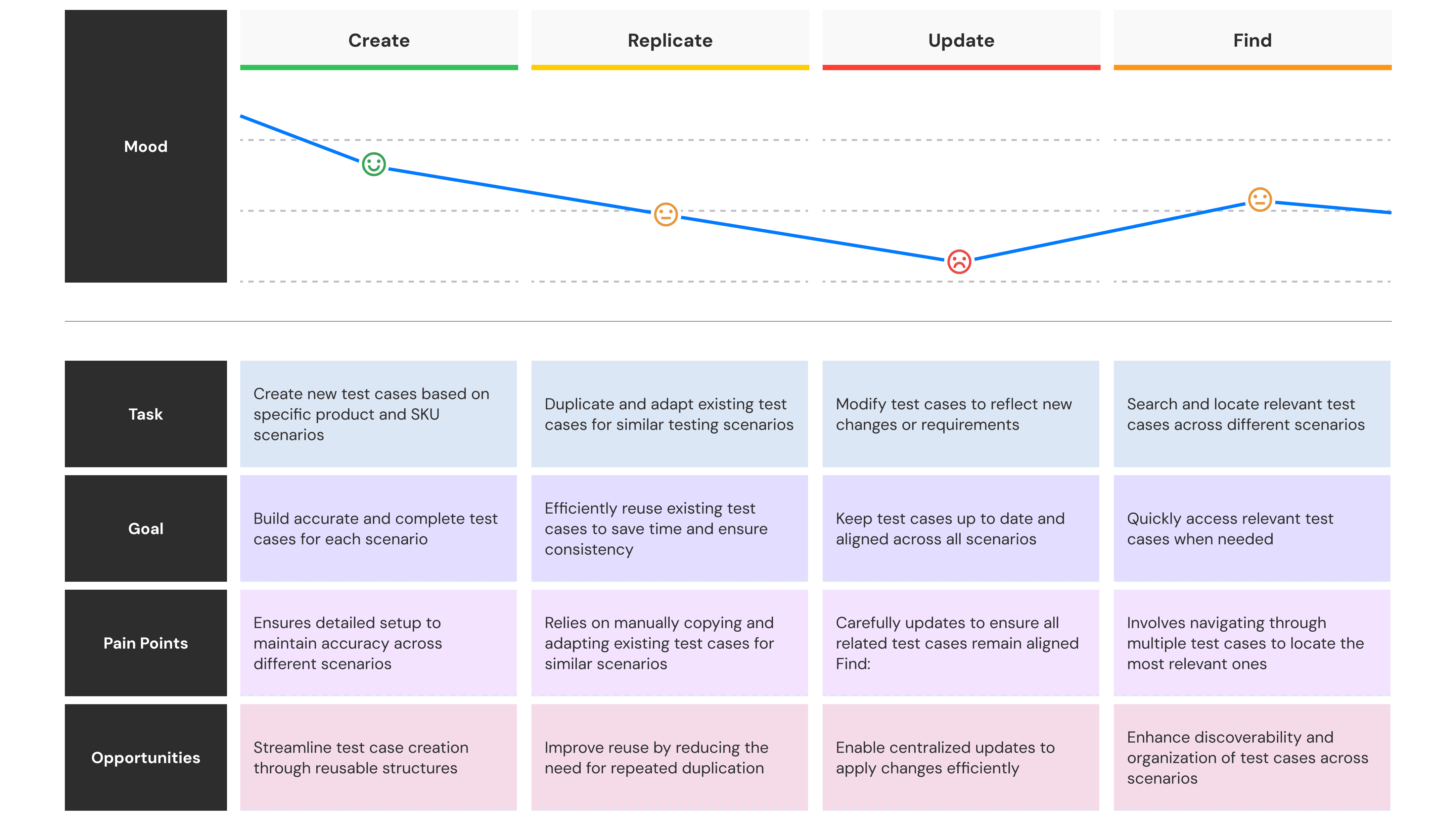
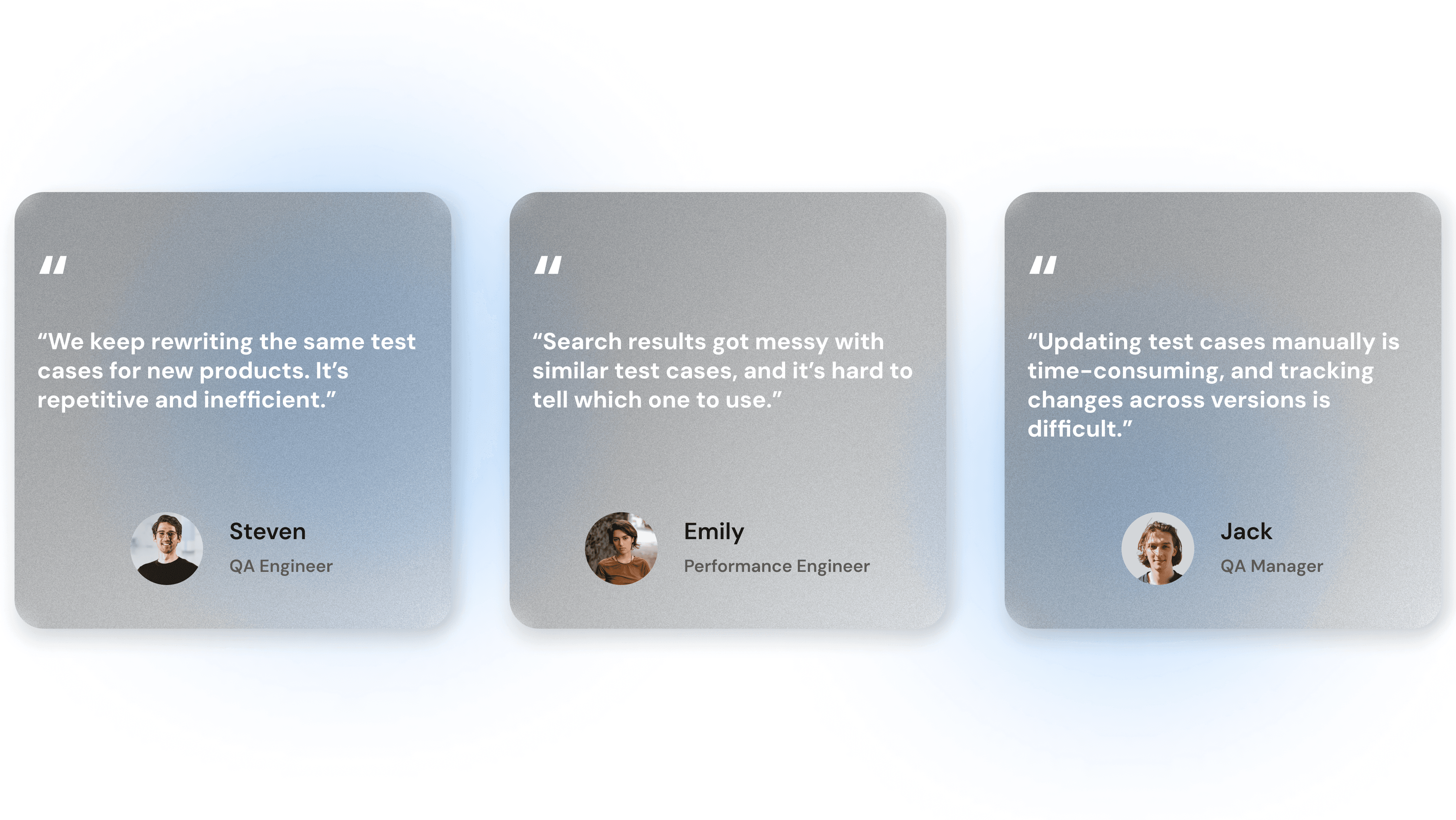
User Journey & Quotes
Key Learnings
In-depth interviews with customer QA teams have synthesized three bottlenecks waiting to be solved
1. Limited reuse and classification
Similar test cases were repeatedly created despite minimal differences
2. Poor searchability and discoverability
Redundant cases cluttered search results, making it hard to find the right one
3. Painful maintenance and version tracking
Updates and change tracking were time-consuming and error-prone
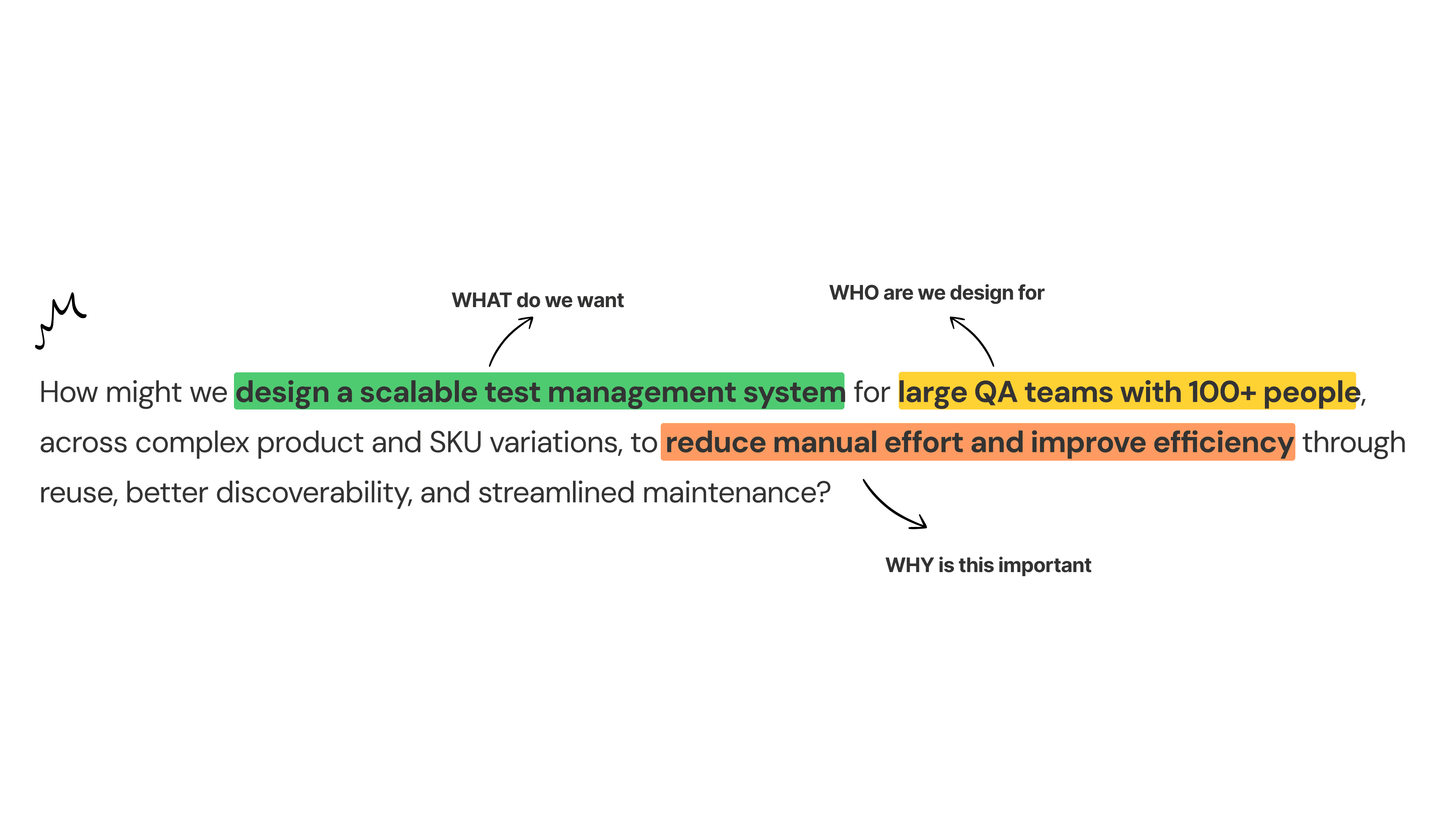
Problem Statement
🎨 Design directions
Reduce manual effort through reuse: Enable QA teams to reuse requirements and test cases across product and SKU variations, minimizing repetitive creation
Improve clarity and discoverability: Structure test data and relationships to make test cases easier to search, identify, and manage
Design for scalable workflows: Integrate seamlessly across setup, configuration, and execution to support large QA teams and complex product variations
🧠 Ideation
I architected a configurable data structure to automate repetitive work at scale. The solution focused on three main highlights:
Core Features
End-to-End Workflow Integration:
Integrates seamlessly across system setup, project configuration, and runtime execution, enabling users to define product/SKU structures, bind data sources, and generate test cases across combinations within a unified workflow
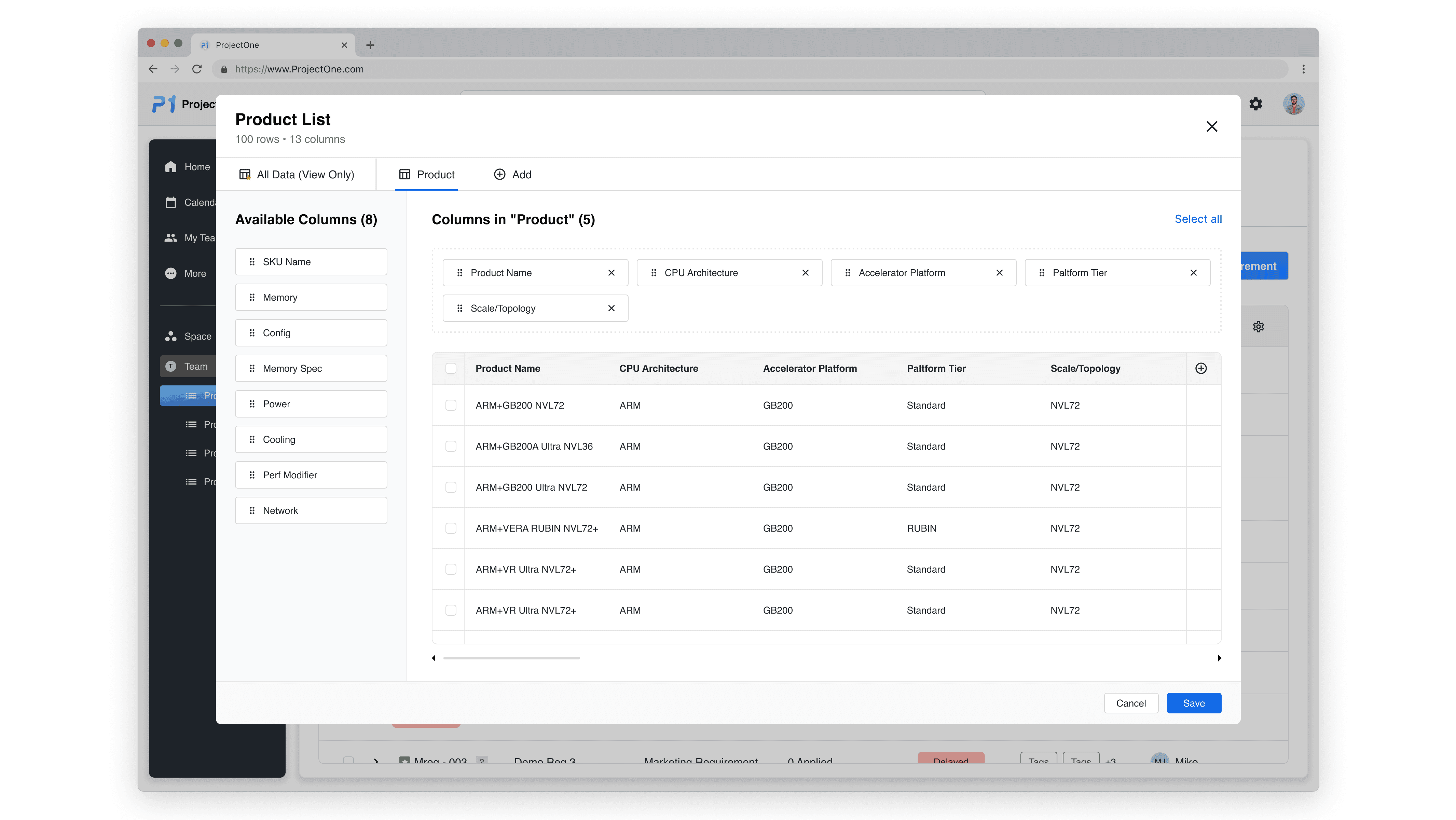
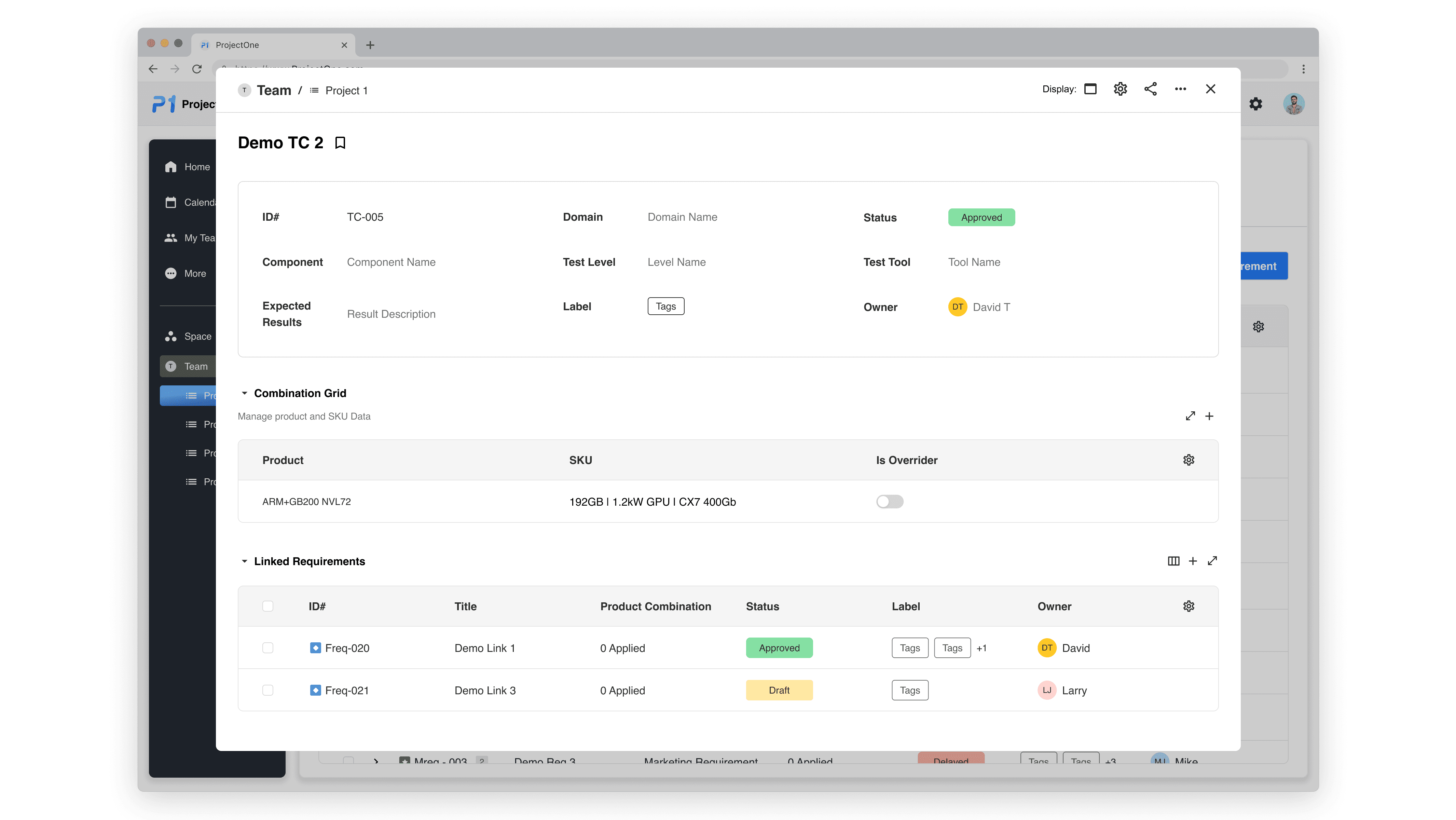
Product & SKU Hierarchy
Users can define a “Product” and its associated SKUs (e.g., specifications) as a structured hierarchy, serving as a master template for generating and managing related testing entities.
Centralized Edit Strategy
Changes made to a parent entity can propagate to its child instances, ensuring consistency across the test library while reducing manual maintenance effort.
🎯Final deliverable
Space-Level Activation
The first step requires users to go to the space level to enable the field within the requirement and test cases module to activate the feature.
Centralized Data Import
Admins go to the data library to import Product and SKU data via a CSV file, manually separating the data into distinct tables within the system.
Project-Level Binding
Users then bind the Product Combination feature to specific library tables at the project level to ensure the data source is correctly mapped for that specific team.
Test Case Runtime (Implementation)
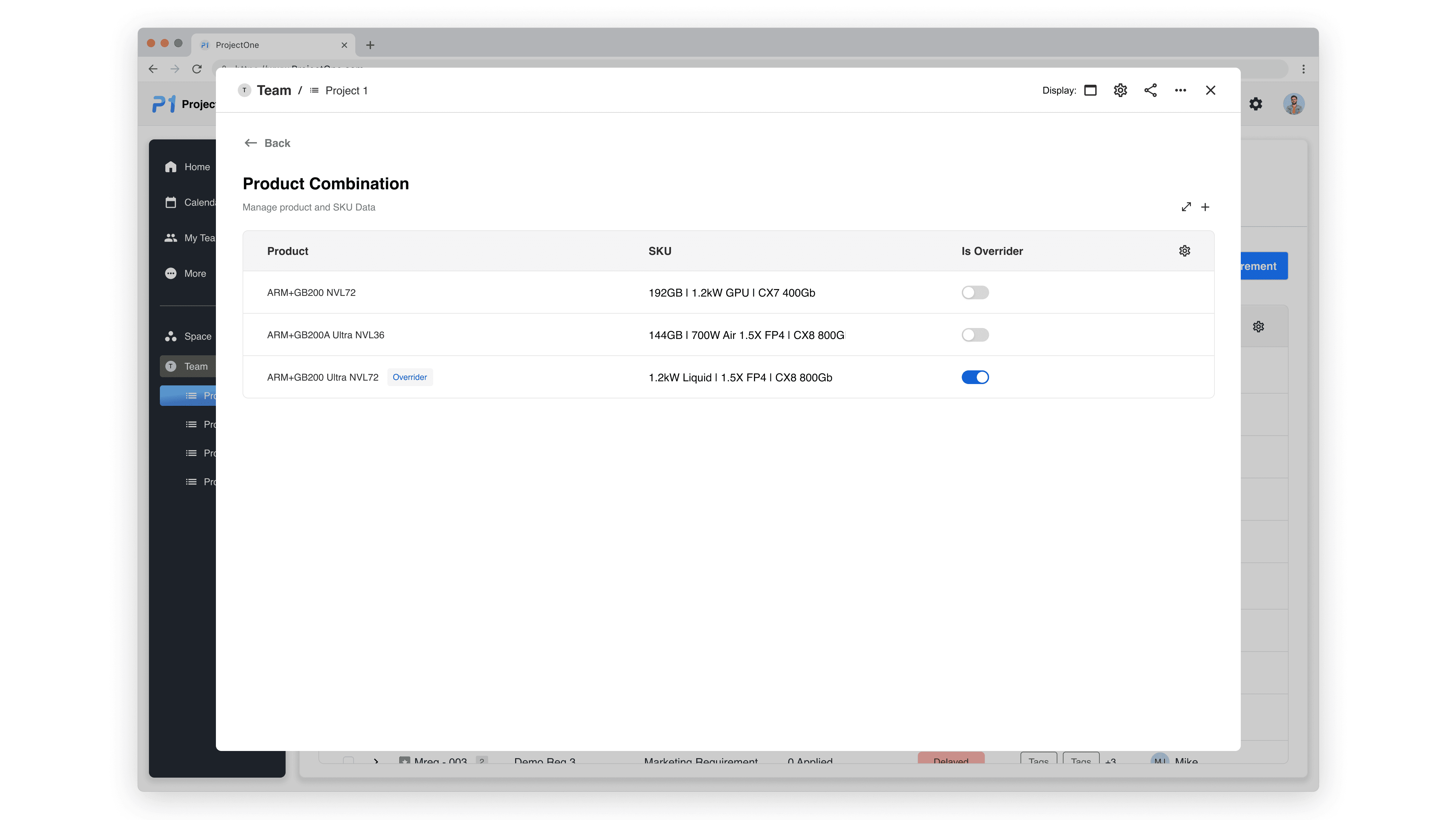
Defined Inheritance Logic for maintenance
During the setup of child instances, users choose between Duplicates (pure replications that inherit all master changes) or Overriders (instances where specific parameters are tweaked and remain static even if the master branch changes).
🏅 Reflection
Navigating Ambiguity in B2B Systems
Building a 0→1 feature for complex enterprise workflows required breaking down abstract problems into structured, phased milestones, while continuously refining scope through backlog prioritization and iterative validation
Cross-Functional Alignment at Scale:
Delivering this feature depended on tight alignment across engineering, product, and go-to-market teams, using clear PRDs, user stories, and feedback loops to balance technical feasibility with real customer needs
Designing for Systems, Not Just Features:
This project reinforced the importance of thinking beyond individual features to design scalable systems—where data structures, workflows, and reuse mechanisms work together to support long-term maintainability